
Do We Really Need to Roll for That Conversation?
Out of all the mechanics in RPGs, social encounters have always been some of the least intuitive to me.
Combat makes sense.
A player character may have more combat prowess, training, toughness, or supernatural ability than the person sitting at the table. So we roll dice to determine whether the character hits the enemy.
That is easy enough.
Most of the time we also roll first and explain the result afterward.
You swing your sword.
Roll.
Hit.
Now tell me what that looks like.
Social encounters often work backwards.
The GM says:
What do you say?
So the player gives this one- or two-minute speech, makes their argument, threatens someone, pleads their case, or tells an elaborate lie.
Then we roll Charisma.
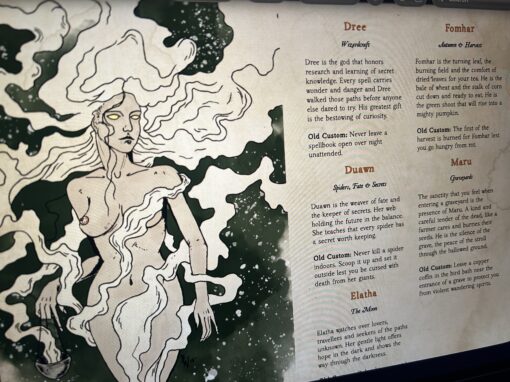
Or, in the case of Samhain: Hearth & Horror, Essence.
And only after the roll do we find out whether that wonderful speech was apparently convincing or whether the NPC somehow hated every word of it.
It is a little strange.
And yet, somehow, it works.
I Want the Conversation to Matter
I constantly want to lean toward roleplaying and the fiction.
Social interaction is probably half of why I love RPGs in the first place.
"Real" characters interacting with a world.
Talking to people.
Making friends.
Creating enemies.
Trying to convince someone to open a door they absolutely should not open.
Trying to talk a frightened villager into telling you what they saw in the woods.
Trying to convince a monster that maybe eating you is not actually in its best interest.
That stuff is the game to me.
Which brings me back to the dice.
What happens when a player gives an incredible argument and then rolls terribly?
Or gives a terrible argument and rolls amazingly well?
I suppose that is simply the risk we take whenever dice are introduced.
Dice create uncertainty.
And when we roll them, they help tell the story.
But maybe that is the important part:
When we roll them.
What If We Only Rolled When We Didn't Know?
What if dice were only rolled when we genuinely were not sure whether something would succeed or fail?
That is certainly not a new idea.
But I think I want to lean into it much harder.
If the players are simply having a conversation with someone, why roll at all?
If they make a reasonable request and the NPC has no reason to refuse, then maybe the answer is simply:
Yes.
If the request is completely unreasonable, perhaps the answer is:
No.
The dice become important somewhere in the middle.
When I, as the Harvest Master, honestly do not know how this person will react.
That is where uncertainty becomes useful.
Let the Fiction Set the Difficulty
I also think the fiction should heavily influence any roll that does happen.
If a player makes a decent argument, maybe it just works.
If there is still some uncertainty, maybe the Target Number is low.
TN 5.
TN 8.
Something that leans in favor of the player succeeding because they have already done most of the work through roleplaying.
The roll is not determining whether the argument was good.
We already heard the argument.
The roll determines whether it lands with this particular person.
That distinction matters to me.
The default for a normal conversation probably should not be:
Make an Essence roll.
The default should be:
Have the conversation.
Then roll when something uncertain emerges from it.
What About Intimidation?
This gets even more interesting when we start talking about intimidation.
Is intimidation always Charisma?
Why?
If a character calmly describes exactly what will happen if the brigand does not step aside, maybe that is Charisma/Essence.
But what if a seven-foot brute lifts a table, throws it across the tavern, flexes his muscles, and lets out a guttural scream?
That sounds a lot more like Might to me.
I would happily take either.
Tell me what your character is doing.
Tell me how they are trying to intimidate this person.
Then we can decide what makes sense if a roll is actually necessary.
The fiction comes first.
Then and only then.....the mechanic follows.
Last Night's Play-Test
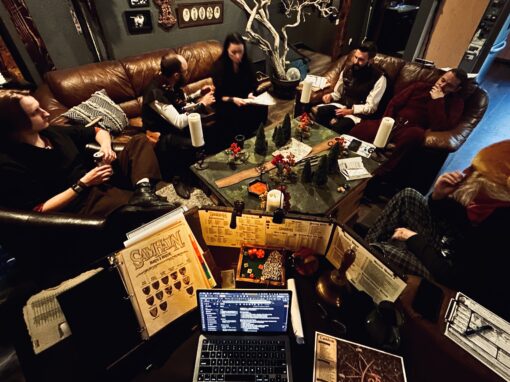
This really came into focus during last night's Samhain play-test.
We had an entire scenario where there was no combat, but there were real stakes on the line.
Everything was handled through roleplaying with only two actual rolls.
The first roll was miserable.
And that mattered.
Later, another player made such a convincing argument that I barely wanted a roll at all.
We rolled anyway.
Success.
The entire exchange created some fantastic fiction at the table.
It was nerve-racking.
There was uncertainty.
There were consequences.
And we did all of it without needing a complicated social subsystem.
That is probably telling me something.
No, You Cannot Seduce the Dragon
One of the stranger extremes of social mechanics is the idea that a good roll can override the fiction entirely.
You know the joke:
"I seduce the dragon."
Roll.
Natural 20!
Congratulations. Apparently the Bard now has a dragon baby momma or daddy.
That is silly.
A natural 20 does not suddenly make the impossible logical.
There still needs to be grounding in the fiction.
This isn't Shrek.
Unless your campaign is Shrek.
Then have at it.
Dice should resolve uncertainty.
They should not rewrite reality.
If something is impossible, you probably should not be rolling.
Samhain Already Has Most of What It Needs
The more I think about this, the less I believe Samhain needs some elaborate set of social rules.
The game already has a Denizen Reaction Table:
Immediate Violence
Hostile Intention
Wary Uncertainty
Neutral Withdrawal
Eager Ally
That gives the Harvest Master a starting point whenever one is needed.
From there, conversation can actually change things.
The HM can choose a logical initial reaction based on the situation, the Denizen, and what has already happened.
Then let the players talk.
If someone tells an obvious lie, maybe we roll.
If someone attempts a difficult deception, maybe we roll.
If someone sincerely pleads with an angry Denizen and I genuinely do not know whether that plea will work?
Roll.
If there is no uncertainty?
Keep talking.
I Don't Need Social Combat
There are games that build elaborate systems around social encounters.
Social hit points.
Influence tracks.
Argument actions.
Rounds of verbal combat.
That is not what I want for Samhain.
I don't need another combat system disguised as a conversation.
I want the conversation itself to matter.
Let the fiction establish what is possible.
Let the player's approach matter.
Let the Harvest Master decide what makes sense.
And when none of us really knows what happens next?
That is when we pick up the dice.
That feels about right.
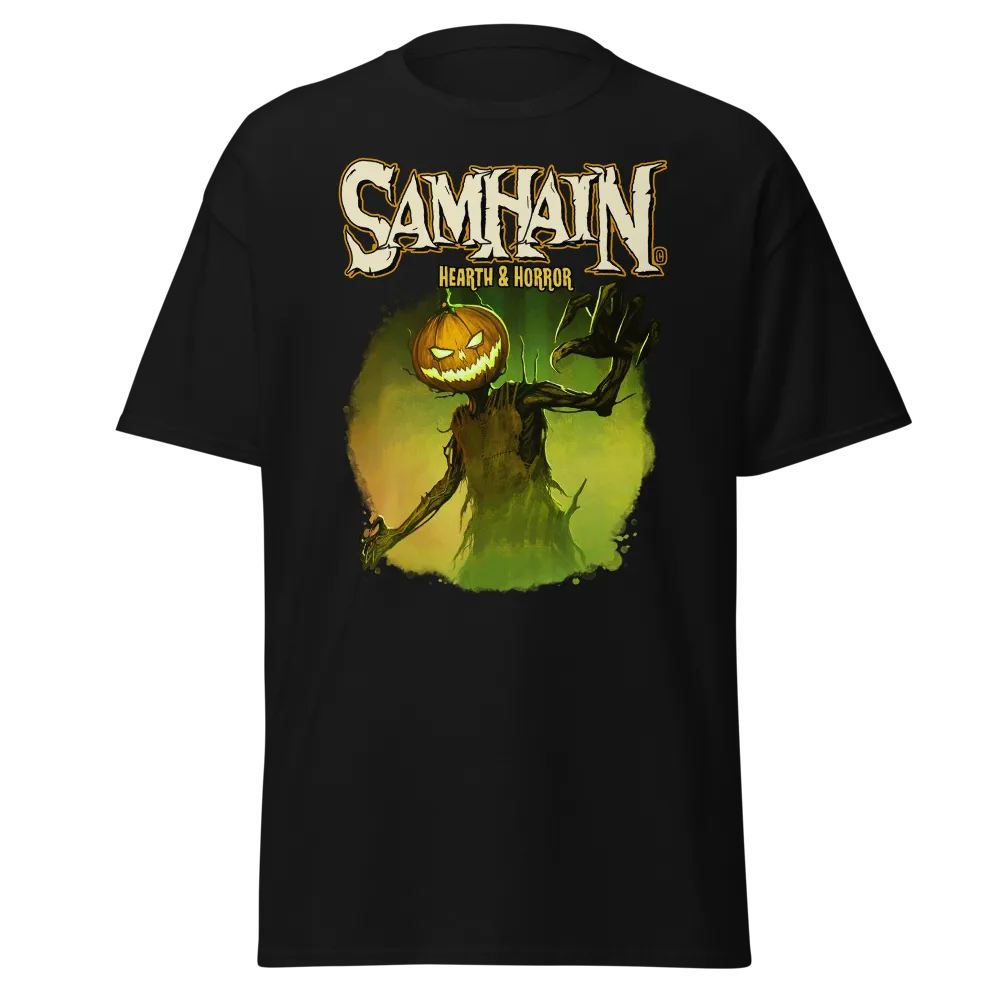





Social Encounters. If they convince me no roll, some things are impossible, as you say, seduce the dragon or make the king give me his crown.
If you are not feeling it or not sure, then make them roll.
I agree if it makes sense then use a different stat. Like if they are flexing them guns.